The $1.45 Billion Secret: Why Your Data Was Stolen, And Nobody Told You

She changed her bank password on a Tuesday morning.
The security alert looked real. Her bank’s logo. Professional formatting. “Unusual login from Nigeria.”
She logged in. Everything looked fine. Balance correct. No weird charges. Changed the password anyway.
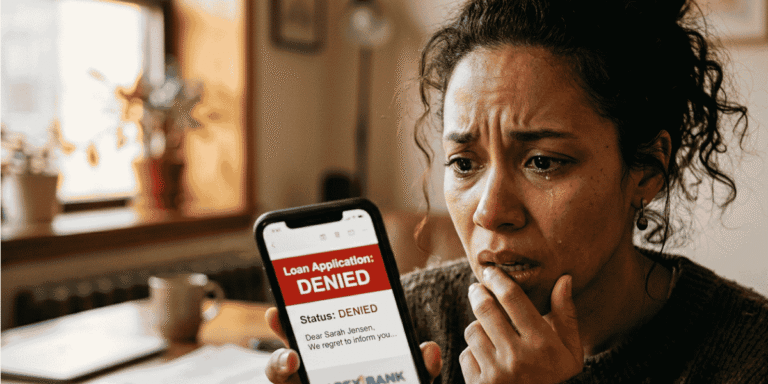
Three months later, her car loan was denied.
Credit score down 200 points. Four new credit cards she never opened. All maxed out. A personal loan. A fraudulent tax return.
Where did they get her information?
The breach happened six months earlier. A store she’d shopped at once, two years ago. They never told her.
This opening scenario is illustrative and based on common patterns documented in FBI IC3 reports, not a specific individual case.
64,882 People Lost $1.45 Billion Last Year
According to the FBI’s 2024 Internet Crime Report, personal data breaches hit hard:
- 64,882 complaints filed
- $1,453,296,303 in reported losses
- Millions more are affected who still don’t know
Most people don’t realize they’ve been breached until the damage appears, often months later. That’s what should keep us up at night.
Phishing? You have to click something. You know if you messed up.
Data breaches? You shopped somewhere three years ago. You filled out a form. You created an account you forgot about.
And now criminals have everything:
- Social Security number
- Birthday
- Email and password
- Bank info
- Medical records
Everything they need to become you.
What Actually Happens in a Data Breach
The simple version.
Criminals break into a company’s database. That company has your information because you used their service once. Maybe years ago.
They steal everyone’s data at once. Millions of people. Then they sell it.
Your complete identity can sell for as little as $20 to $100 on the dark web. These packages, known as “fullz,” typically include your name, Social Security number, date of birth, and address. According to a 2025 dark web pricing analysis by DeepStrike, prices stay low precisely because so many breaches have flooded the market with supply. Less than a dinner out. That’s what your identity is worth to a criminal.
Why This Is Getting Worse
You’re Not the Target
When hackers breach a retailer, a hospital, or a financial company, they’re not after you specifically. They’re after everyone.
Your info gets swept up with millions of others. Sold in bulk. Resold. Resold again.
One breach creates unlimited problems:
- They try your email and password everywhere (most people reuse passwords)
- They open credit cards in your name
- They file fake tax returns
- They access your medical records
- They sell your information over and over for years
Companies Don’t Always Tell You Quickly
Data breach notification laws vary by state and industry. Under HIPAA, healthcare companies have up to 60 days to notify patients after discovering a breach. State laws often require notification within 30 to 45 days. But investigations take time, and smaller breaches in some states face longer windows.
The FBI’s 2024 report recorded 238 healthcare cyber threat reports filed with IC3. By the time you receive a notification letter, criminals may have already had weeks or months of access to your data.
You often find out when:
- Credit applications get denied
- Collections agencies call
- The IRS says you already filed
- Your bank account empties
- Bills arrive for cards you never opened
The Real Cost: What the FBI Data Shows
The FBI’s 2024 IC3 report makes the scale of this problem impossible to ignore.
Personal data breaches generated 64,882 complaints and over $1.45 billion in losses, but that’s only the people who reported them. The FBI consistently notes that cybercrime is significantly underreported, suggesting real losses are likely far higher.
Identity theft, a direct consequence of data breaches, generated another 21,403 complaints and $174 million in additional losses in 2024. These aren’t separate problems. They’re the same problem, two steps apart.
Adults over 60 were hit hardest across all cybercrime categories, submitting 147,127 complaints and suffering $4.8 billion in total losses. Data breaches don’t just threaten your credit. For older Americans, they can wipe out savings built over a lifetime.
The FBI’s Recovery Asset Team was able to freeze or recover funds in some cases, but speed is everything. The faster a victim reports, the better the chance of stopping a transfer before it disappears.
How Breaches Actually Happen
Weak Security at Companies You Trust
That shoe store from last year? They might be storing your credit card with poor encryption.
The small clinic that billed your insurance? Their billing company got breached.
That free app you downloaded in 2019 and forgot about? Still has your email, birthday, and password.
Employees Make Mistakes
Sometimes it’s not a sophisticated hack. It’s an employee who:
- Fell for a phishing email
- Used a weak password
- Got tricked by a phone call
- Sold the data
The Third-Party Problem
You trust your bank. Your bank trusts a payment processor. That processor uses cloud storage. That company contracts with a security firm.
One weak link breaks the whole chain. In 2024, some of the largest breaches came through third-party vendors that most victims had never heard of.
Warning Signs You’ve Been Breached
Data breaches are silent. Watch for these:
Credit weirdness:
- Cards or loans you didn’t apply for
- Hard inquiries from unknown lenders
- Collections for accounts you don’t recognize
Tax problems:
- IRS says you already filed (you didn’t)
- E-file rejected
- Refund never shows up
Account issues:
- Locked out of accounts
- Password reset emails you didn’t request
- Two-factor codes you didn’t trigger
Medical insurance:
- Bills for services you never received
- Collection calls for debts that aren’t yours
- Insurance saying you hit limits you didn’t reach
Strange mail:
- Bills you didn’t make
- Credit card offers to addresses you’ve never lived at
What You Do Right Now
You can’t prevent data breaches. Companies hold your data. They’re responsible for protecting it.
But you can make stolen data worthless.
Step 1: Check If You’ve Been Breached
Go to Have I Been Pwned (haveibeenpwned.com). Enter your email addresses.
You’ll probably find breaches you never knew about. Don’t panic.
Step 2: Freeze Your Credit (DO THIS)
This is the most important thing you’ll do all year.
A credit freeze stops anyone from opening new accounts in your name. It’s free and takes about 15 minutes. Here’s how it compares to a fraud alert:
Contact all three bureaus:
- Equifax
- Experian
- TransUnion
You get a PIN. Use it to unfreeze when you need to apply for credit. Then freeze it again.
Step 3: Unique Passwords Everywhere
If criminals get one password from a breach, they try it everywhere.
Get a password manager:
- Bitwarden (free plan available, open source)
- 1Password (paid, well-regarded)
- Dashlane (paid, good for families)
Create unique passwords for everything. If one account gets breached, your others stay safe.
Step 4: Two-Factor Authentication
Even if your password gets stolen, they can’t get in without the second factor.
Use an authenticator app whenever possible instead of SMS. Here’s why: SIM swapping is when a criminal tricks your cell phone carrier into linking your phone number to a device they control. Once they have your number, they can intercept your text verification codes. The FBI recorded 982 SIM swap complaints in 2024 alone, with $25.9 million in losses.
Monthly Habits
Check your credit reports:
Free reports once a year from each bureau at AnnualCreditReport.com.
A smart trick: request one every 4 months, rotating bureaus. Free year-round monitoring.
Review bank statements:
Look for:
- Charges you don’t recognize (even tiny ones)
- Accounts you didn’t open
- Address changes you didn’t make
Small charges often test the waters before larger ones.
Check medical benefits:
Review every Explanation of Benefits. If you see services you didn’t receive, report them immediately.
Medical identity theft is more dangerous than most people realize. When someone uses your insurance to receive care, their diagnoses, prescriptions, and treatments get filed under your name. Your medical record now shows conditions, medications, and allergies that belong to someone else. The next time a doctor treats you, they’re working from a file that isn’t entirely accurate. In an emergency, that can matter a great deal.
Yearly Actions
Full credit report: Pay for the complete version annually. It shows all inquiries and detailed account history.
IRS account check: Create an account at IRS.gov. Verify nobody filed taxes in your name.
Password updates: Even with a password manager, update these annually: bank accounts, email, health insurance, and Social Security Administration.
Digital footprint inventory: List all your accounts. You’ll be surprised how many you have. Close the ones you don’t use. Each is a potential vulnerability.
If You Discover a Breach
Right now:
- Place a fraud alert with credit bureaus
- Freeze credit at all three bureaus
- Change passwords (affected account plus any that used the same password)
- Alert your bank
- File a report at IdentityTheft.gov
Within 24 hours:
- Report to the FBI at IC3.gov
- File a police report (creditors often require this)
- Call IRS Identity Protection: 800-908-4490
- Save everything (emails, letters, all correspondence)
Ongoing:
- Check credit weekly for 3 months, then monthly
- Keep detailed records (time spent, calls made, money spent)
- Consider identity theft insurance
- Stay persistent, since recovery typically takes 6 to 12 months
What Companies Should Do vs. What They Actually Do
What they should do:
- Notify you promptly within legally required timeframes
- Provide free credit monitoring
- Pay for identity restoration services
- Compensate for documented damages
What they actually do:
- Notify you at or near the legal deadline
- Offer one year of basic monitoring
- Include arbitration clauses that limit your legal options
- Provide minimal ongoing support
You have to fight for yourself. They won’t do it for you.
Your Action Plan
This week:
This month:
This year:
The Hard Truth
You will be breached. Not “if.” When.
The average person’s data exists in hundreds of databases. Companies you used once. Services you forgot about. Places you shopped years ago.
You can’t prevent the breach.
But you can prevent the damage.
The difference between losing $1,000 and losing $100,000 isn’t luck. It’s preparation.
Protect yourself before the notification letter. Not after.
Because that letter might never come.
Frequently Asked Questions
How do I know which credit bureau to freeze first?
Freeze all three at once. It takes 15 minutes total. Criminals can check different bureaus, so freezing just one doesn’t help. Do Equifax, Experian, and TransUnion all in one sitting.
Does freezing my credit hurt my credit score?
No. Freezing your credit has no impact on your score. It just prevents new accounts from being opened. Your existing accounts work normally and continue to report.
What’s the difference between a freeze and a fraud alert?
A freeze completely blocks new credit applications. A fraud alert flags your file and asks lenders to verify your identity before approving credit. A freeze is a stronger protection.
Can I still use my credit cards if my credit is frozen?
Yes. A freeze only stops new accounts from being opened. Your existing cards, loans, and accounts work exactly the same.
How much does it cost to freeze and unfreeze?
Free. Federal law requires all three bureaus to freeze and unfreeze at no charge.
Resources
Report breaches:
- FBI Internet Crime Complaint Center: IC3.gov
- FTC Identity Theft: IdentityTheft.gov
Check your status:
- Have I Been Pwned: haveibeenpwned.com
- Annual Credit Report: AnnualCreditReport.com
Freeze your credit:
- Equifax: equifax.com/personal/credit-report-services
- Experian: experian.com/freeze/center.html
- TransUnion: transunion.com/credit-freeze
Get help:
- Identity Theft Resource Center: 888-400-5530
- IRS Identity Protection: 800-908-4490
Sources & References
- FBI Internet Crime Complaint Center (IC3) — 2024 Internet Crime Report
https://www.ic3.gov/Media/PDF/AnnualReport/2024_IC3Report.pdf
(Accessed February 2026) - DeepStrike — Dark Web Data Pricing 2025
https://deepstrike.io/blog/dark-web-data-pricing-2025
(Published August 13, 2025, accessed February 2026)
This article is for informational purposes only. It does not constitute professional cybersecurity consulting, legal advice, or financial advice. For specific concerns about identity theft or fraud, consult appropriate professionals, including law enforcement, financial advisors, or licensed attorneys. The opening scenario is illustrative and based on common patterns documented in FBI IC3 reports, not a specific individual case.