What's actually targeting your family right now
AI didn't just make old scams sharper — it created entirely new ones. Start with the one closest to your situation.
AI Voice & Video Scams
Recognize a cloned voice or a fake video call before you send money or personal info.
Learn the Warning SignsAI Companions & Fake Relationships
Spot an AI-powered chatbot built to earn trust before it costs you or someone you love.
See How They WorkAI Phishing & Impersonation
The messages don't have typos anymore. Learn the new tells that actually work.
Spot the New TellsProtecting Kids From AI Threats
AI-generated content and chatbots are reaching kids in ways most parents haven't seen yet.
Protect My KidsPrefer to start with the basics? Lock Down My Accounts · Already Been Scammed? Recovery Guide

- Use a different password for every accountWhy: one leaked password can't be reused to unlock your other accounts.
- Add the extra login code step — 2 minutesWhy: it stops most break-ins even if a criminal already has your password.
- Pause before clicking any link in a text or emailWhy: urgency is the scam. Real institutions can wait five minutes for you to check.
- Set a family code wordWhy: it's the fastest way to confirm a call or video really is your family member.
- Reuse the same password across accounts
- Assume "it won't happen to me" — that's exactly what they count on
- Give personal info to anyone who calls or texts you first
- Post your location, plans, or kids' details on social media
Start with the guide for your situation

They Can Clone Your Child's Voice: How to Spot the "Grandparent Scam"
The 5 most dangerous AI scams targeting families in 2026 — voice cloning, deepfake video calls, and how to protect the people you love.

The Virtual Kidnapping: What to Do When You Hear Your Child Screaming on the Phone
The 3 psychological levers scammers use, and the exact "Defense Protocol" to shut them down.
Read the Guide →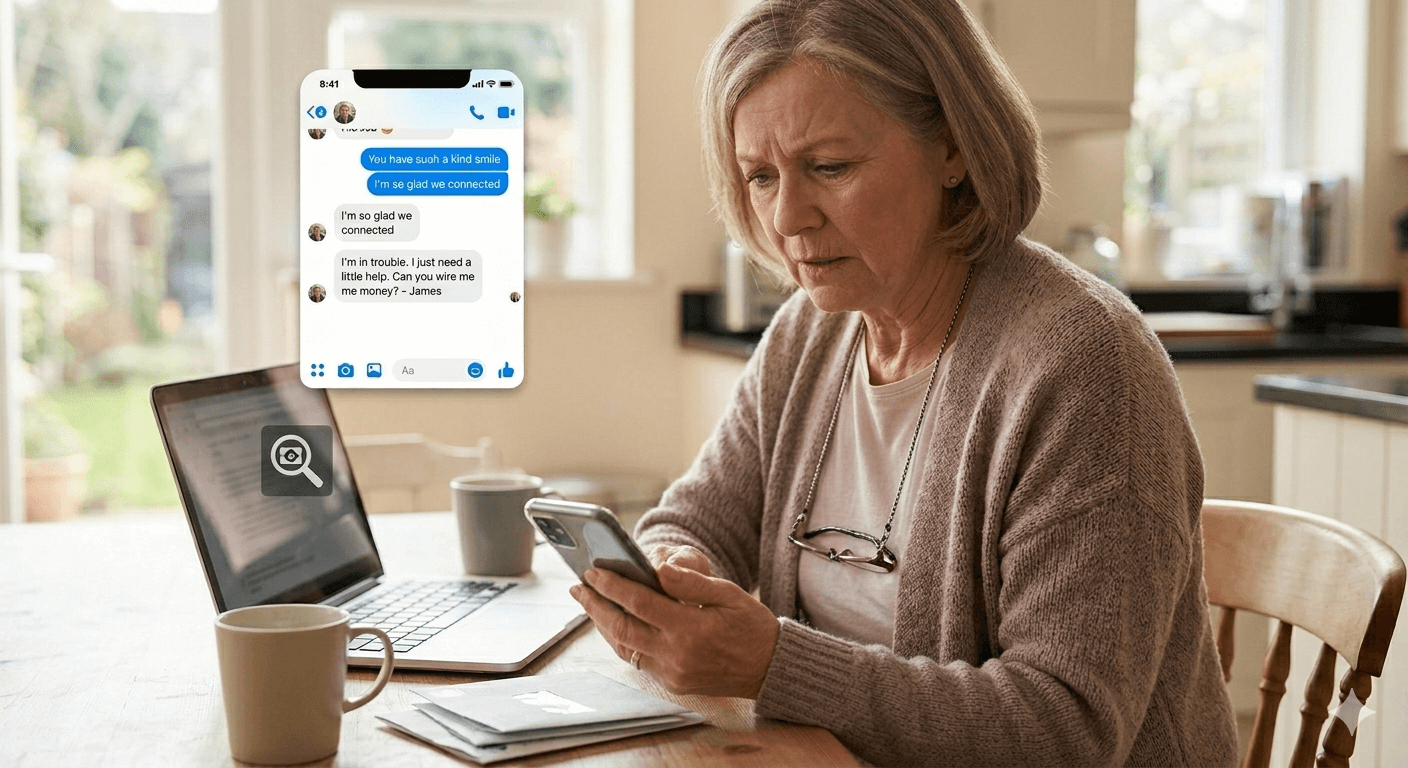
The "Cupcake Trick": One Sentence That Catches AI Phone Scammers
A single sentence that exposes a sophisticated automated voice impersonator in 5 seconds flat.
Read the Guide →
"I Got in Trouble at School" — How AI Is Targeting Parents
Why busy parents are the primary target, and the two-minute defense that stops most of it cold.
Read the Guide →